Problem solved · The clock
We put the breaks on the schedule. That didn’t make us compliant.
Told by Torsten, chef and owner-operator. It happened at the restaurants I run, every day.
The problem.
In California, a cook on an eight-hour shift gets a meal break and two rest breaks. That’s eight taps on the clock: in, out, and a pair for every break. The clock in our old point of sale wasn’t built for that.
So we put the breaks on the schedule. That didn’t mean they were taken, and our job wasn’t done. At the end of the day, a manager went to every cook: did you take your break? If not, why not? A missed break meant a form.
That was half an hour of a manager’s day, every day. And the records still weren’t clean.
How it runs now.
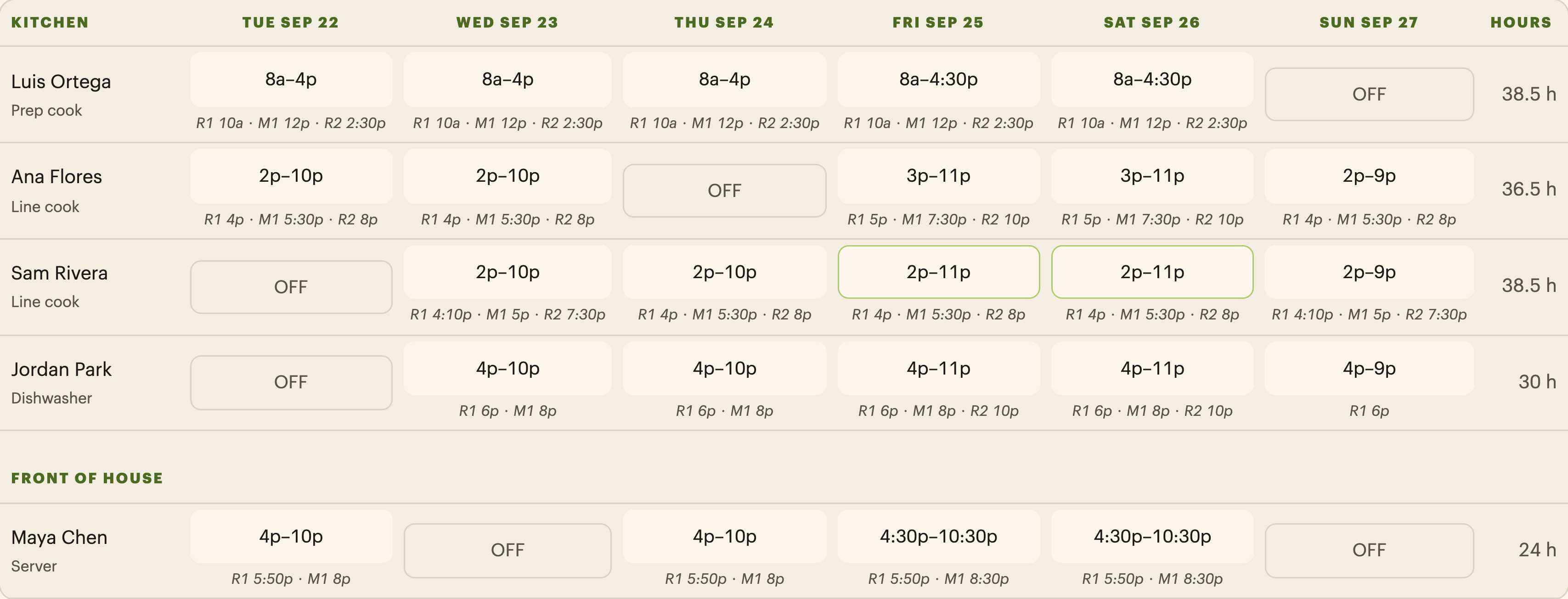
The manager writes the week, and the schedule places every meal and rest break where California law puts it, outside the rush you blocked off. Everyone gets the week on their phone, and the clock shows which break is next.
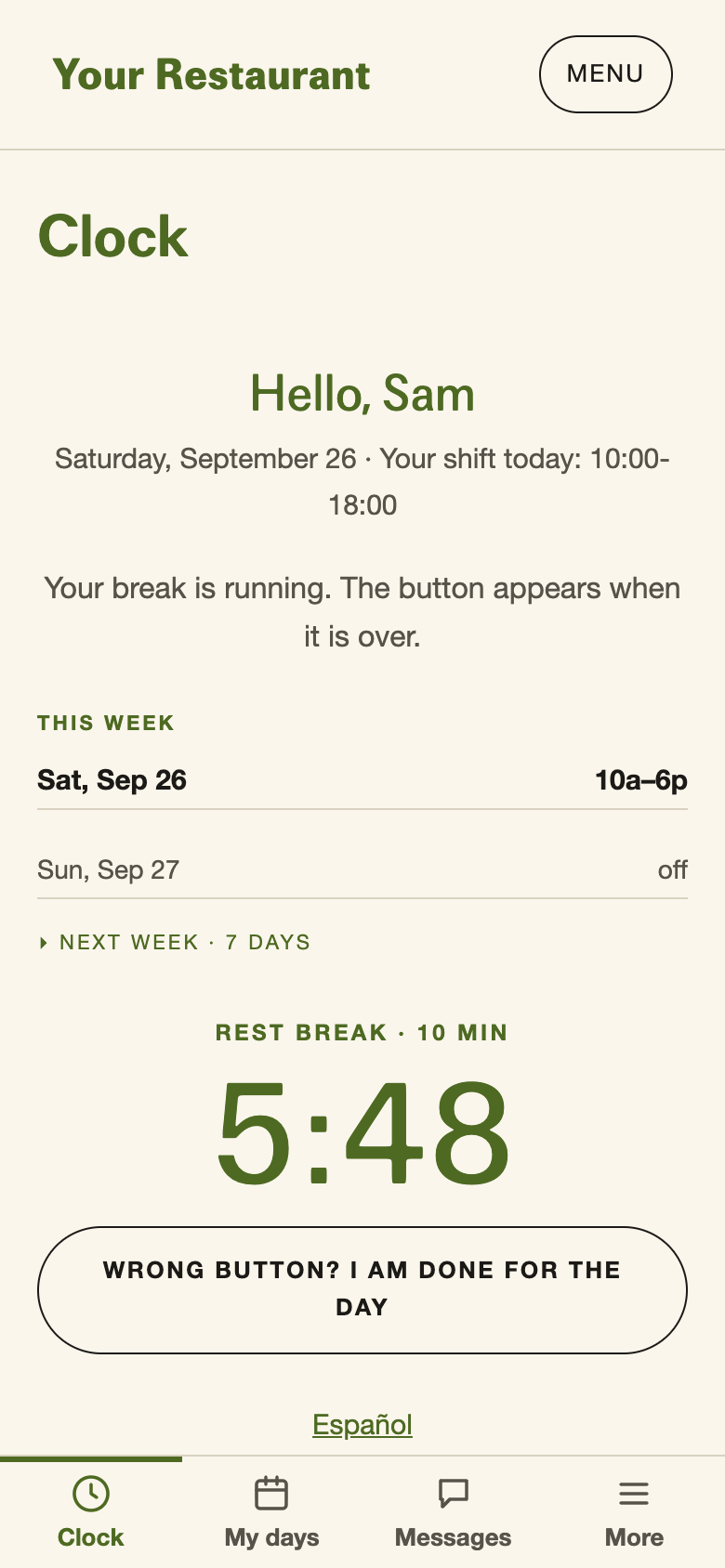
When a break comes due, the cook’s phone says so. The Back button only appears once the break has run its full length, and every tap is kept.
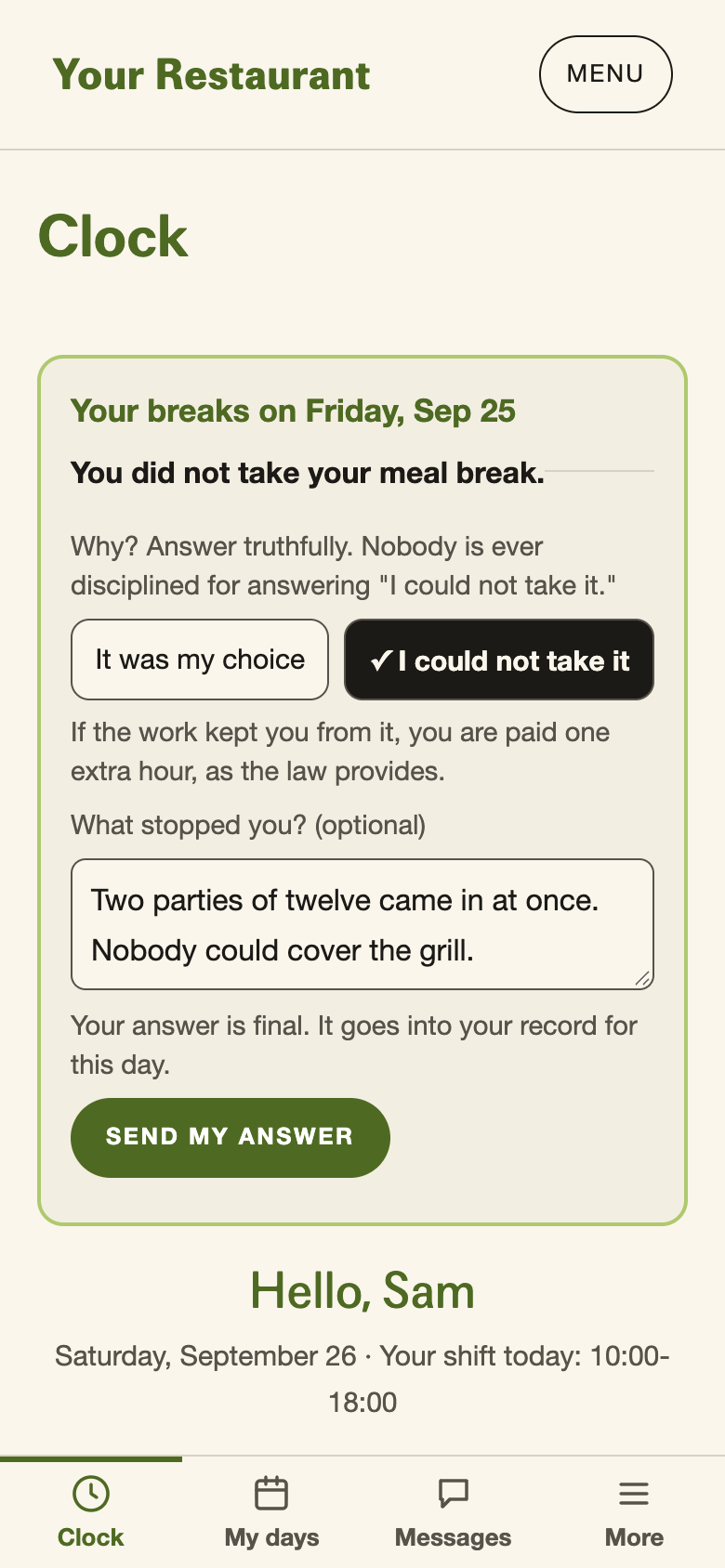
If a break was missed or late, the cook’s clock asks them after the shift: was it their choice, or did the work keep them from it? They can say what stopped them. The answer is final and stays with that day. If the work kept them from it, or they never answer, the extra hour goes on the pay sheet by itself. Nobody is disciplined for saying the work stopped them.
The manager doesn’t chase anyone and gets that half hour back.
The parts that solved it.
- ScheduleEvery break placed by California law, outside your rush.
- ClockEvery break tapped and kept, and the question when one is missed.
- Pay sheetThe extra hour, when it’s owed, already on it.
Real screens, with a made-up restaurant and made-up staff.
Has this happened in your kitchen?
Tell us what’s going on. We write back by email, and we can send you a private link to try the clock yourself, in a made-up restaurant.