People · The pay sheet
Every payday I’m retyping hours and hoping the break penalties are right.
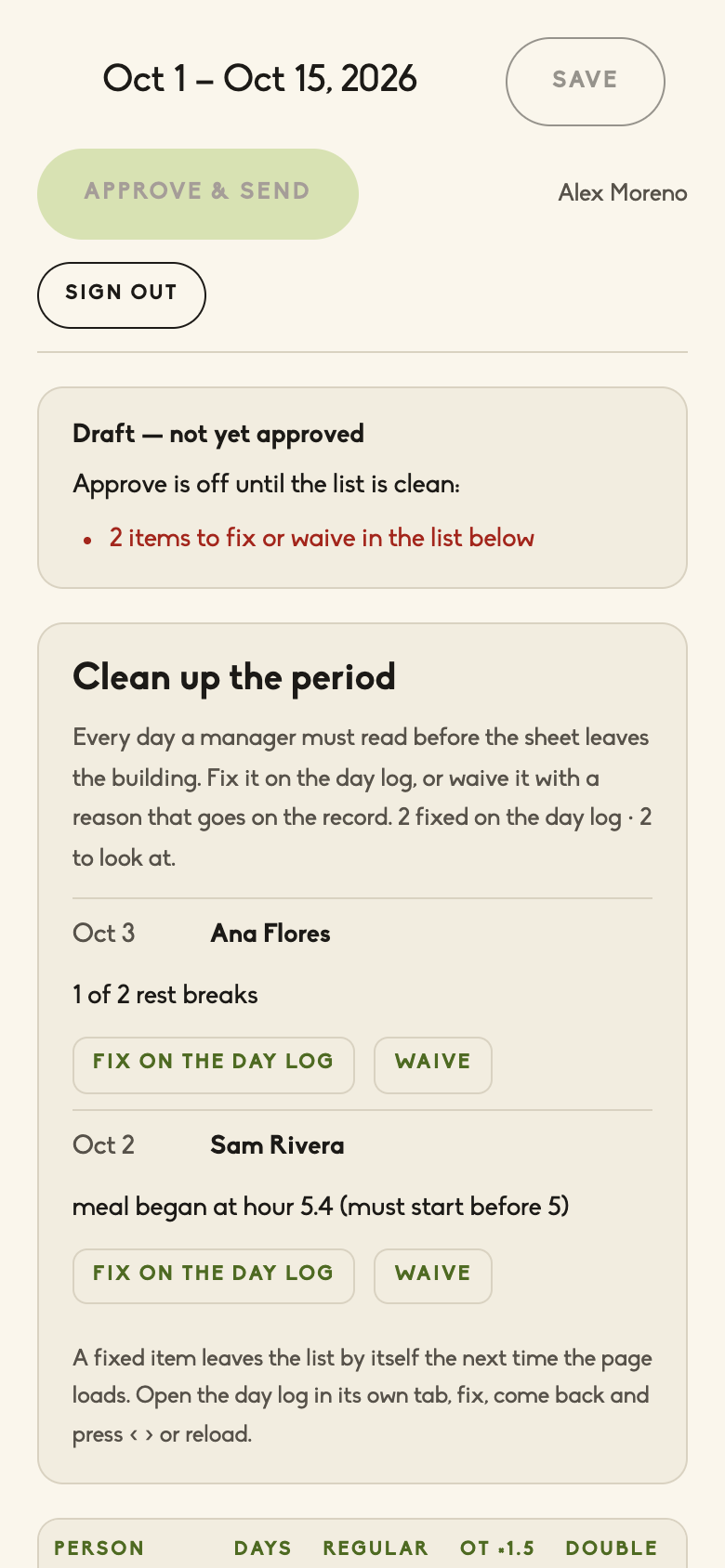
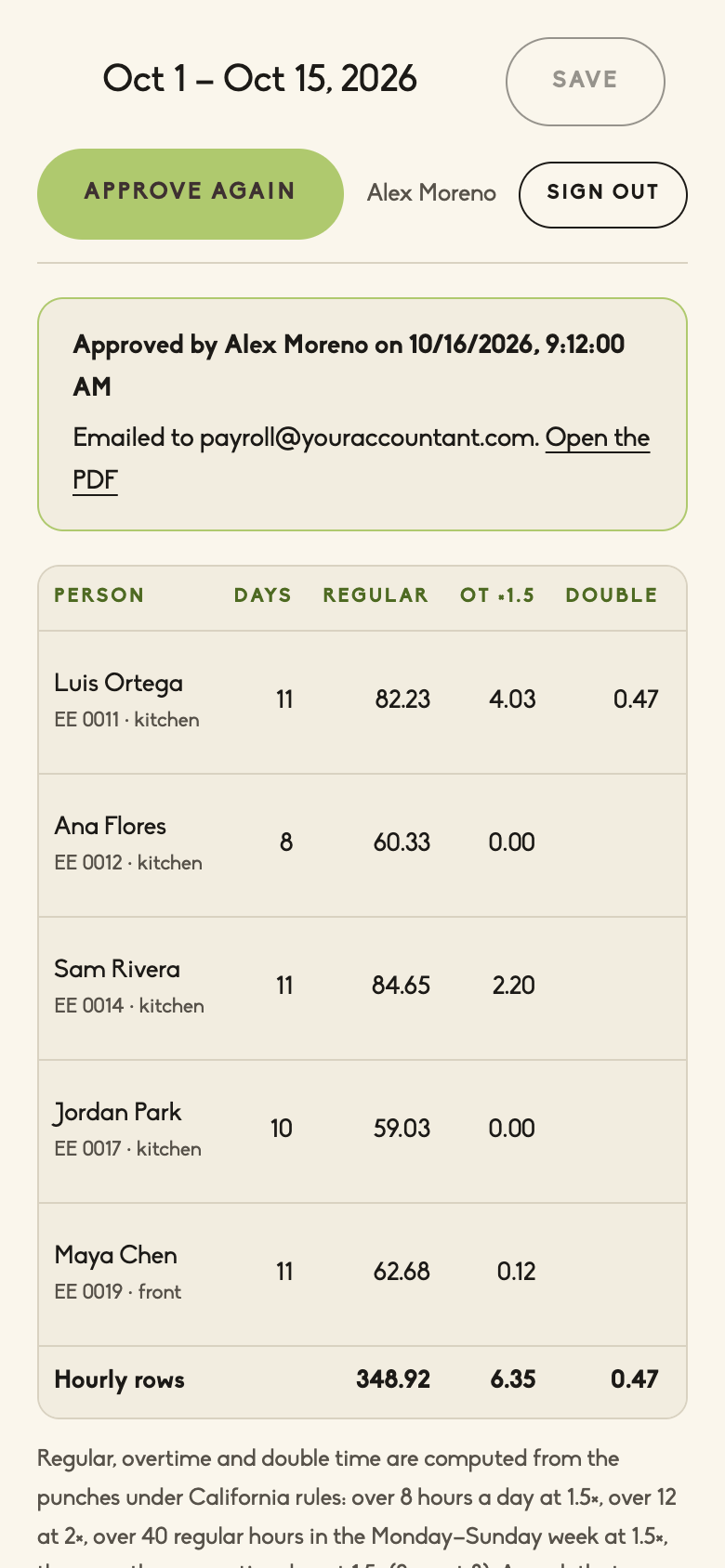
The pay sheet adds up the clock’s taps, so nobody types hours. Every missed break is on it the day it happens, and you approve only when every flag is answered.
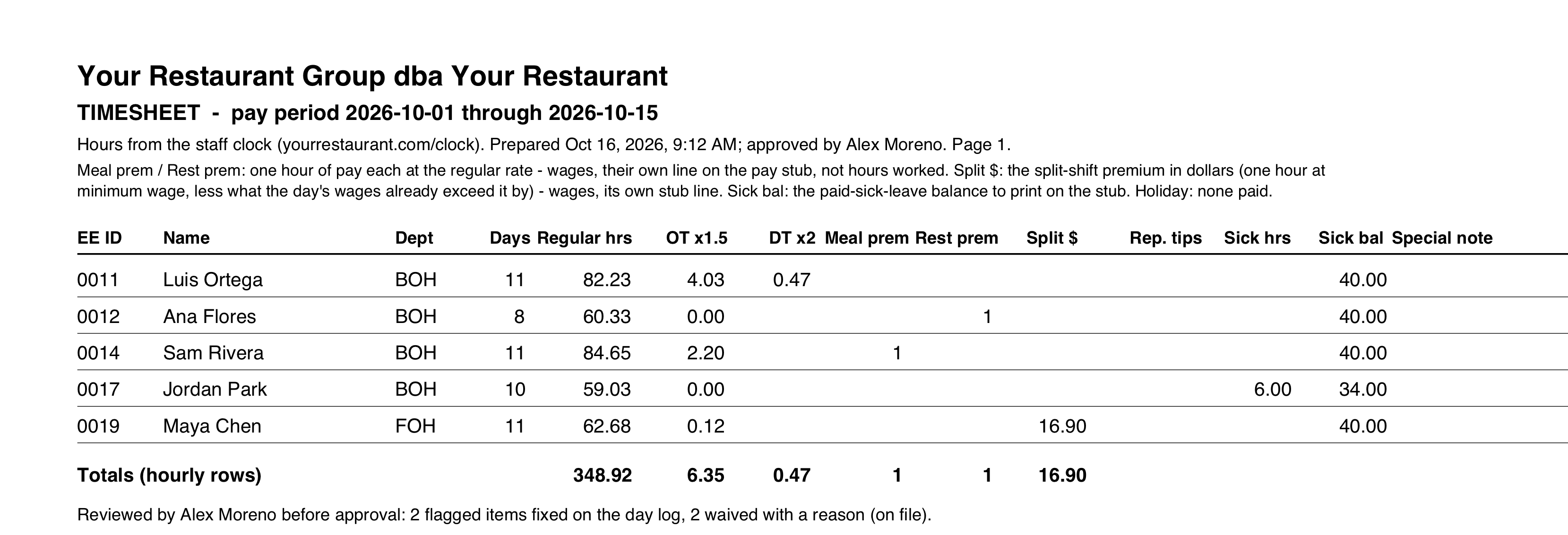
It fills your accountant’s own columns: regular hours, overtime, double time, and a premium for every late meal, missed rest or split shift. A person reads it and approves it before it goes out.
What changes, person by person.
- The managerCleans up the period: every flag fixed on the day log or waived with a reason. Never types hours.
- YouApprove, or name who does. Approve stays locked until every flag is answered.
- The accountantGets their own form within the minute, with nothing new to learn.
- The cookGets a text with their hours the morning after the pay period closes.
- UsKeep up with the law, and tell you what to do when it changes.
Real screens, with a made-up restaurant and made-up staff.
How it starts.
Ready the day the clock goes live. The first period runs beside your old way.
- We read your accountant’s form.We set the sheet up to fill it exactly.
- Each person’s pay type and payroll number come in.We take them from your accountant’s last forms, with you.
- The first pay period runs beside your old way.We compare the two line by line before you trust the first Approve.
Questions.
Does it pay people?
No. It gives your accountant the hours. Paying stays with the accountant or your payroll.
Does it need the Obhut clock?
Yes. The sheet is the clock’s taps, added up.
What if someone says their hours are wrong?
The sheet still goes out on time, so everyone is paid on time. A correction is paid on the next period.
Can I take my records with me?
Yes. Every record exports whenever you want. They’re yours.
See it step by step.
Tell us what’s going on, and we’ll send you a private link to try the pay sheet yourself, every screen of it, in a made-up restaurant. We write back by email.